
Living with severe, chronic pain can feel like being trapped in a cycle of discomfort that never ends. For many, traditional treatments—medications, physical therapy, or even multiple surgeries—simply don’t provide enough relief. When these standard options fail, many patients feel they have reached the end of the road.
However, advanced medical technology has introduced a life-changing solution: Spinal Cord Stimulation (SCS). Often referred to as a “pacemaker for pain,” this technology is one of the most effective tools used by the Best Pain Management Doctor in Secunderabad to help patients reclaim their lives.
What is a Spinal Cord Stimulator?
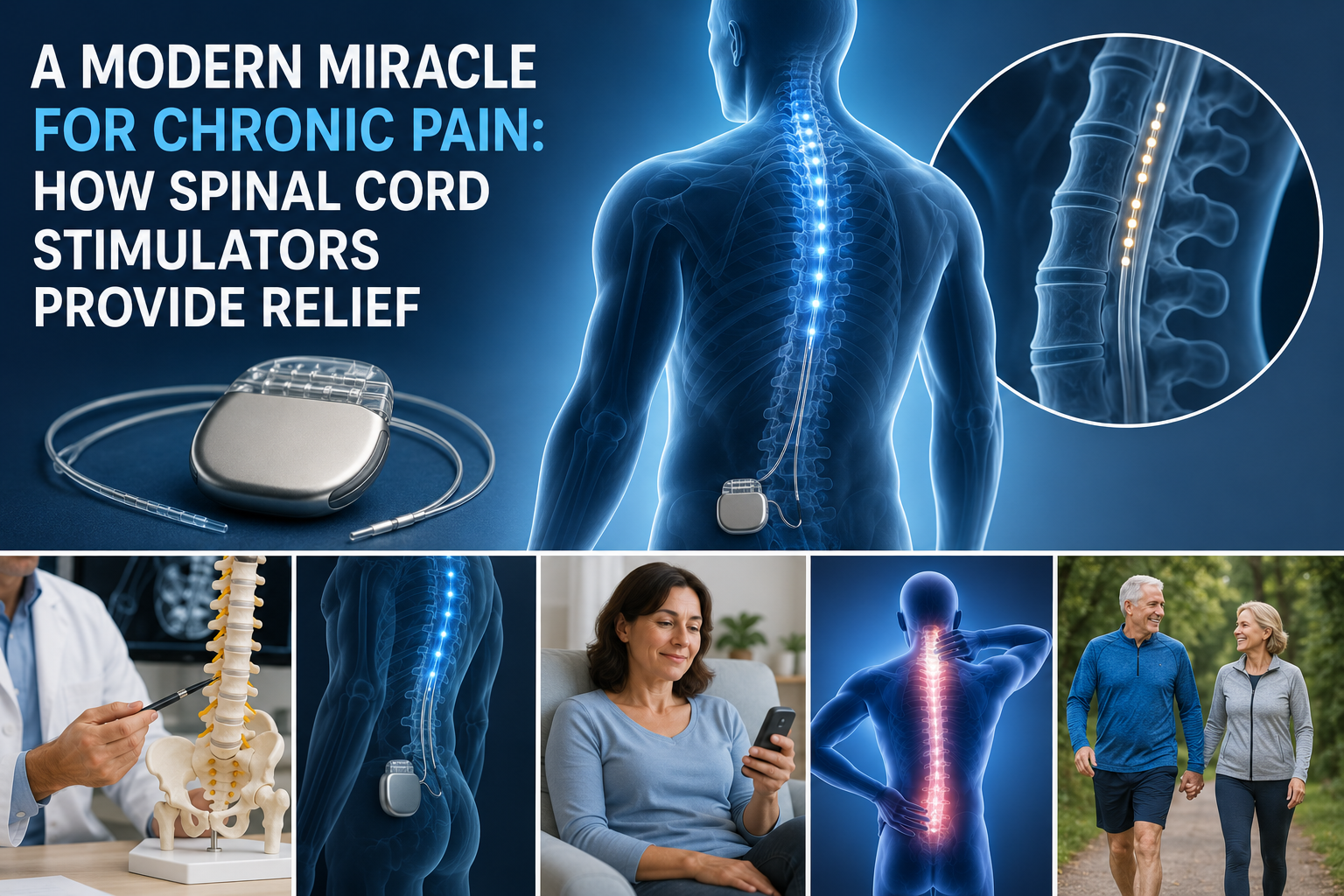
A Spinal Cord Stimulator is an implanted device that sends low levels of electricity directly to the spinal cord to relieve pain. It consists of thin wires (leads) and a small medical battery (generator).
The mechanism is based on the “Gate Control Theory” of pain. Essentially, the device delivers mild electrical pulses that interfere with the pain signals traveling to your brain. Instead of feeling intense pain, patients often feel a pleasant tingling sensation (paresthesia) or, with newer “burst” technology, they may feel no sensation at all—just a significant reduction in pain.
How the Process Works: The “Test Drive”
One of the unique advantages of an SCS is that you can “test-drive” the device before committing to a permanent implant. This is a two-step process:
1. The Trial Phase
During a minimally invasive procedure, a pain specialist places temporary leads near the spinal cord. You wear an external battery on a belt for 5 to 7 days. This allows you to evaluate how much the stimulation improves your pain and mobility during your normal daily activities.
2. The Permanent Implant
If the trial is successful (typically defined as a 50% or greater reduction in pain), a permanent system is implanted. The battery is usually placed under the skin in the upper buttock or abdominal area, where it is discreet and comfortable.
Who Can Benefit from SCS?
At Dr. Amarnath Reddy B, we typically recommend Spinal Cord Stimulation for patients suffering from:
- Failed Back Surgery Syndrome (FBSS): Persistent pain even after spinal surgery.
- Complex Regional Pain Syndrome (CRPS): A chronic pain condition most often affecting the limbs.
- Arachnoiditis: Inflammation of the protective linings of the spinal nerves.
- Refractory Neuropathy: Nerve pain that does not respond to medication.
Why This is a Game-Changer in Secunderabad
For patients in Secunderabad and surrounding regions, accessing this high-end technology means they no longer have to live with debilitating pain. As a specialist, my goal is to reduce your dependence on heavy medications and avoid the risks of further invasive “open” surgeries. SCS is reversible, adjustable, and personalized to your specific pain patterns.
Frequently Asked Questions (FAQs)
1. Does the stimulator cure the source of the pain?
No, the stimulator does not “cure” the underlying condition (like a damaged nerve or scar tissue), but it effectively masks the pain signals before they reach the brain. This allows patients to function much better and participate in activities they previously avoided.
2. Will I feel the electricity in my back?
With older models, patients felt a gentle tingling. However, modern high-frequency or “sub-perception” stimulators work without any tingling sensation at all. You simply notice that your baseline pain has significantly decreased.
3. Can I still have an MRI if I have a Spinal Cord Stimulator?
Many modern SCS devices are “MRI-conditional,” meaning they are safe for MRI scans under specific conditions. If you anticipate needing future MRIs, we ensure that we select a device model that is compatible with imaging technology.
4. Is the surgery for the permanent implant dangerous?
The procedure is considered minimally invasive. While all surgeries carry some risk, the placement of the leads and the generator is performed in a controlled environment using advanced imaging to ensure precision. Most patients go home the same day.
5. How long does the battery last?
This depends on whether you have a rechargeable or non-rechargeable system. Non-rechargeable batteries usually last 3 to 5 years, while rechargeable systems can last 10 to 15 years or more before the generator needs a simple replacement.
6. Can I control the device myself?
Yes! Patients are given a handheld remote (often an app on a dedicated controller or smartphone) that allows them to turn the stimulation up or down, or switch between different programs depending on whether they are sitting, walking, or sleeping.
If you are tired of living with severe chronic pain that hasn’t responded to traditional treatments, it may be time to explore Spinal Cord Stimulation. Consult with Dr. Amarnath Reddy B, the Best Pain Management Doctor in Secunderabad.
Address: Yashoda hospital, Alexander Rd, Kummari Guda, Shivaji Nagar, Secunderabad, Telangana 500003
Phone: +91 9032220848Email: dramarnath.pain@gmail.com